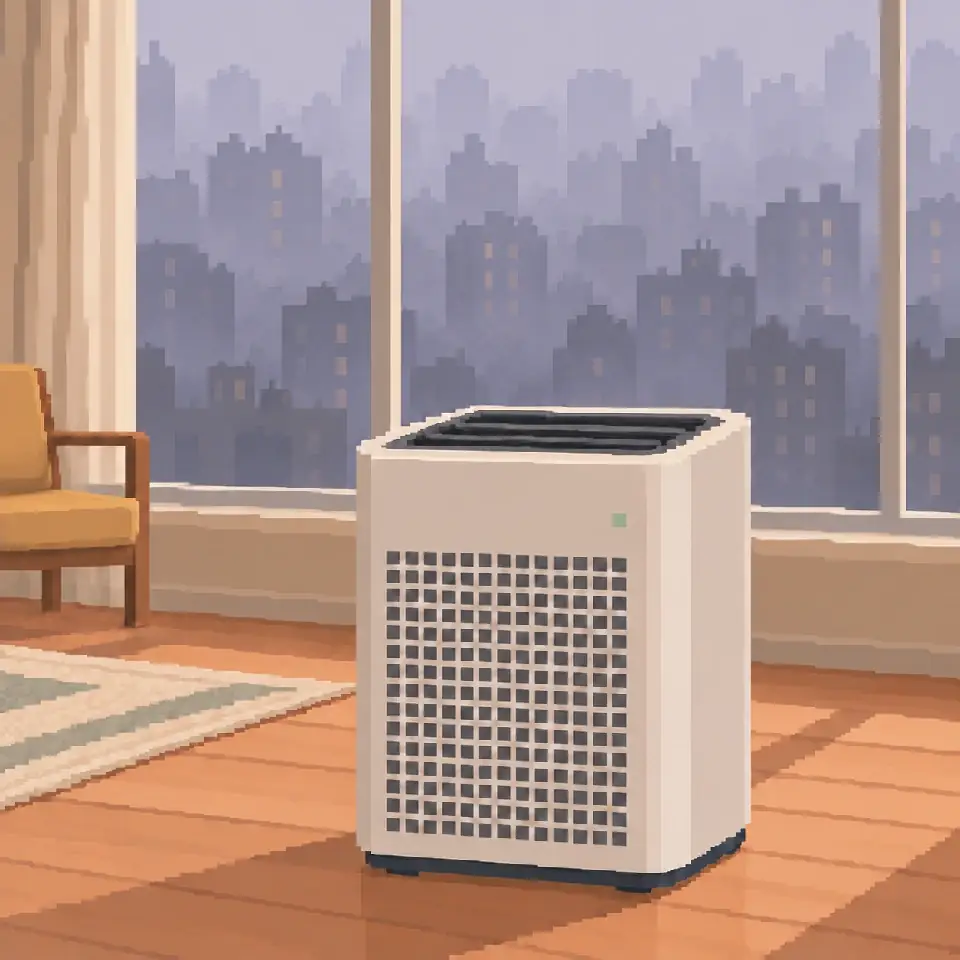
Tashkent’s air worsened again overnight on 27–28 October. The Ecology Committee reported measurements in five districts: PM2.5 reached the “very unhealthy” category at every measurement point on the international scale used by the agency. Light winds and falling temperatures limited the dispersal of pollution.
The agency described a similar situation on 21 October, when a temperature inversion trapped pollution near the ground. During an inversion, air close to the surface mixes less readily with the air above. That makes a fresh reading more useful for choosing when to go out than relying on your usual time of day.
There are several ways to reduce exposure: spend less time in polluted air, lower the intensity of activity and make the air at home cleaner.
You can start without buying anything, by changing routes, timing and household habits. A respirator or air cleaner can help when those steps are not enough.
First, what is the sensor showing?
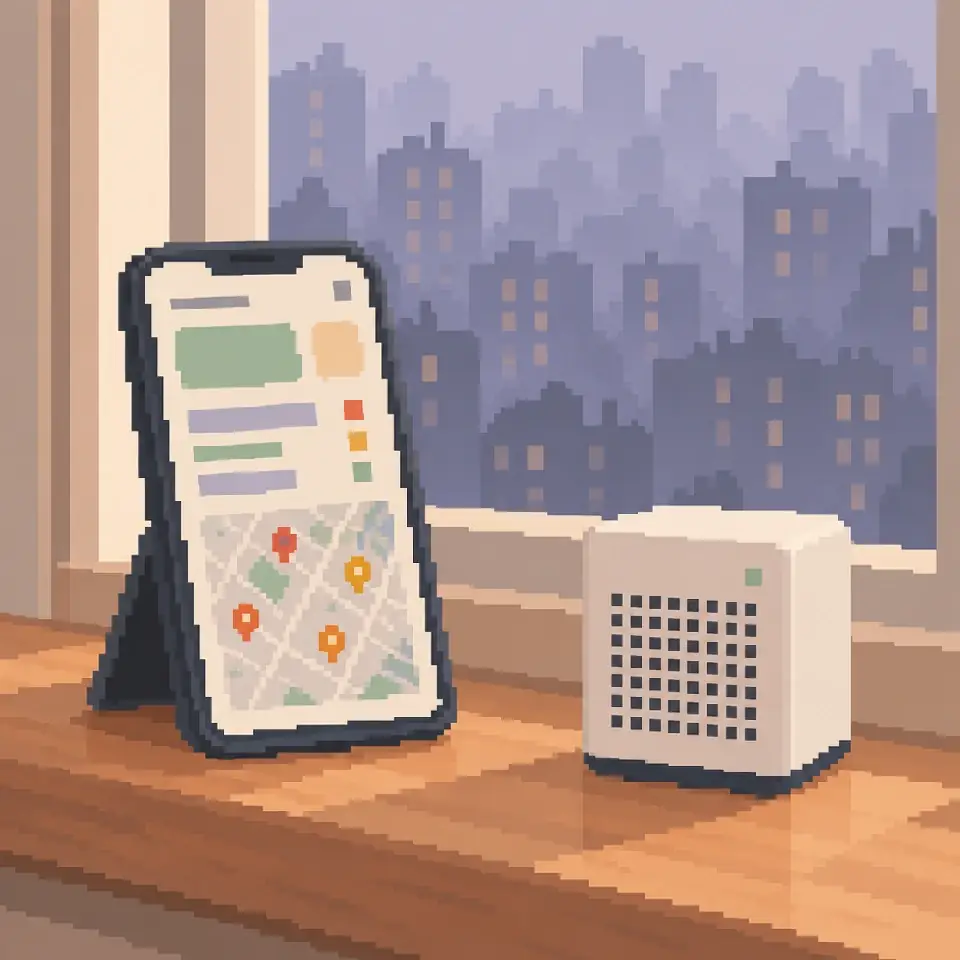
PM2.5 particles are small enough to penetrate deep into the lungs. Their concentration is measured in µg/m³. AQI is an index that turns pollution levels into risk categories. Different scales have different boundaries, so the same colour in two services can mean different things.
IQAir’s map is useful for everyday decisions. Open a nearby station and check its update time and the name of the scale. For example, Xalqlar Dostligi uses Uzhydromet data, displayed by IQAir as U.S. AQI⁺. IQAir calculates this index from an hourly average; the PM2.5 concentration is listed separately. National warnings are also published by Uzhydromet.
For the U.S. AQI scale, these are useful guidelines: 101–150 means increased risk for sensitive groups, who should reduce outdoor exertion and time; at 151–200, everyone should reduce prolonged or intense outdoor activity; at 201–300, postpone non-essential outings. Above 300, limit outings to essential ones.
If you need to go out

If the latest reading is high, you can change the outing itself as well as its timing. The longer we spend in polluted air and the harder we breathe, the more particles we can inhale. Consider rescheduling a long run and walking your usual route more slowly.
Choose a quieter street, courtyard or path away from heavy traffic. A park beside a major road can also have polluted air. There is no single distance at which it becomes safe: wind, buildings and local pollution sources all affect the result.
You could exercise at home or in a gym with cleaner air. Being indoors alone says little about air quality: a stuffy gym with windows open onto a busy road may offer little benefit. If your work is outdoors, break strenuous tasks into shorter stretches and take breaks somewhere with filtered air.
In heavy traffic, closed windows and recirculation reduce the road pollution entering a car. On a long journey, the air needs replenishing: switch to fresh-air intake when outdoor air is cleaner. Continuous recirculation with passengers raises CO₂ and can increase drowsiness.
A respirator starts with the fit
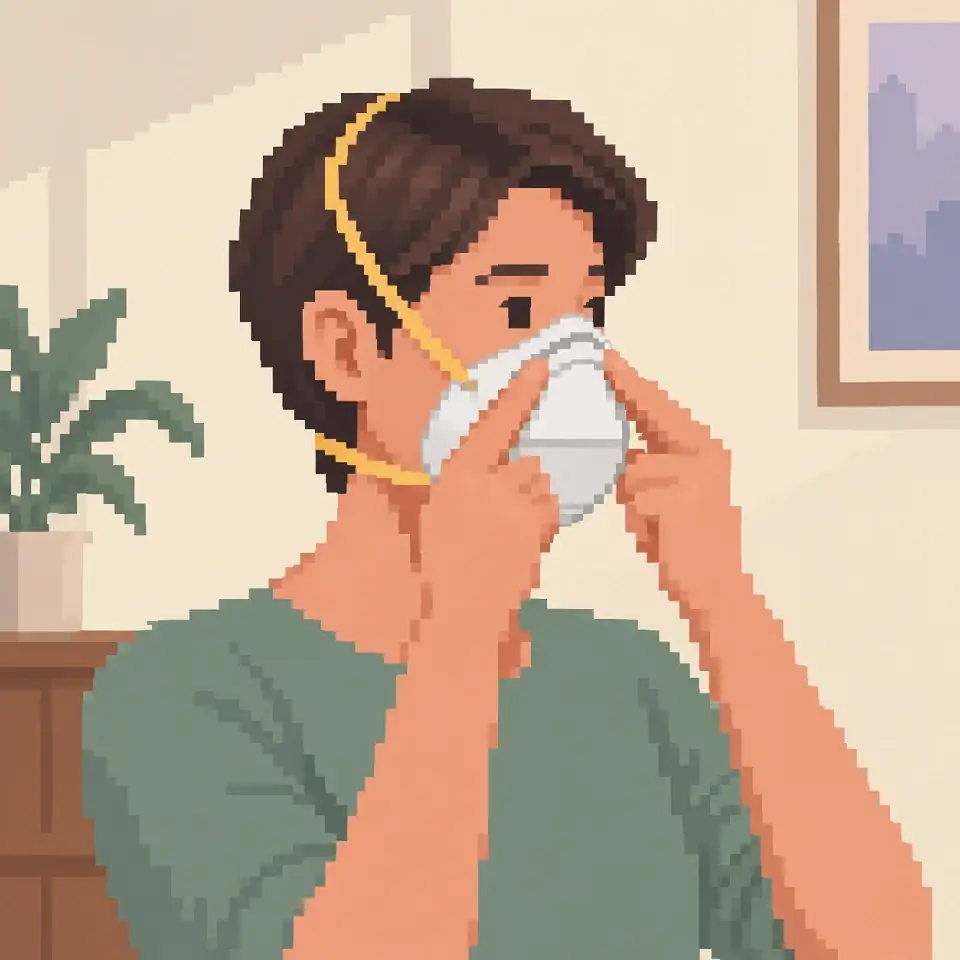
If an essential outing cannot be shortened further, a well-fitting respirator can reduce the amount of fine particles you inhale. Genuine N95, FFP2 or KN95 respirators of a suitable size are options.
The respirator should cover your nose, mouth and chin. Shape the nosepiece with both hands and position the straps as the model’s instructions show. Then check the seal: when you breathe out, air should not leak through gaps around your nose and cheeks. If you cannot get a close fit, try a different shape or size. A beard along the sealing edge prevents a good seal.
An N95 that is damp, dirty, damaged or no longer fits because its straps have stretched needs replacing. Do not wash it or try to “disinfect” it in an oven or microwave. Keep it on throughout unavoidable exposure and remove it in a cleaner place.
This protection is for particles. An ordinary particulate respirator does not protect against carbon monoxide or other gases. If you have a heart or lung condition, discuss respirator use with your doctor beforehand: breathing through one can be harder.
If breathing becomes difficult while wearing it, move to cleaner air and remove it.
At home, start with one room
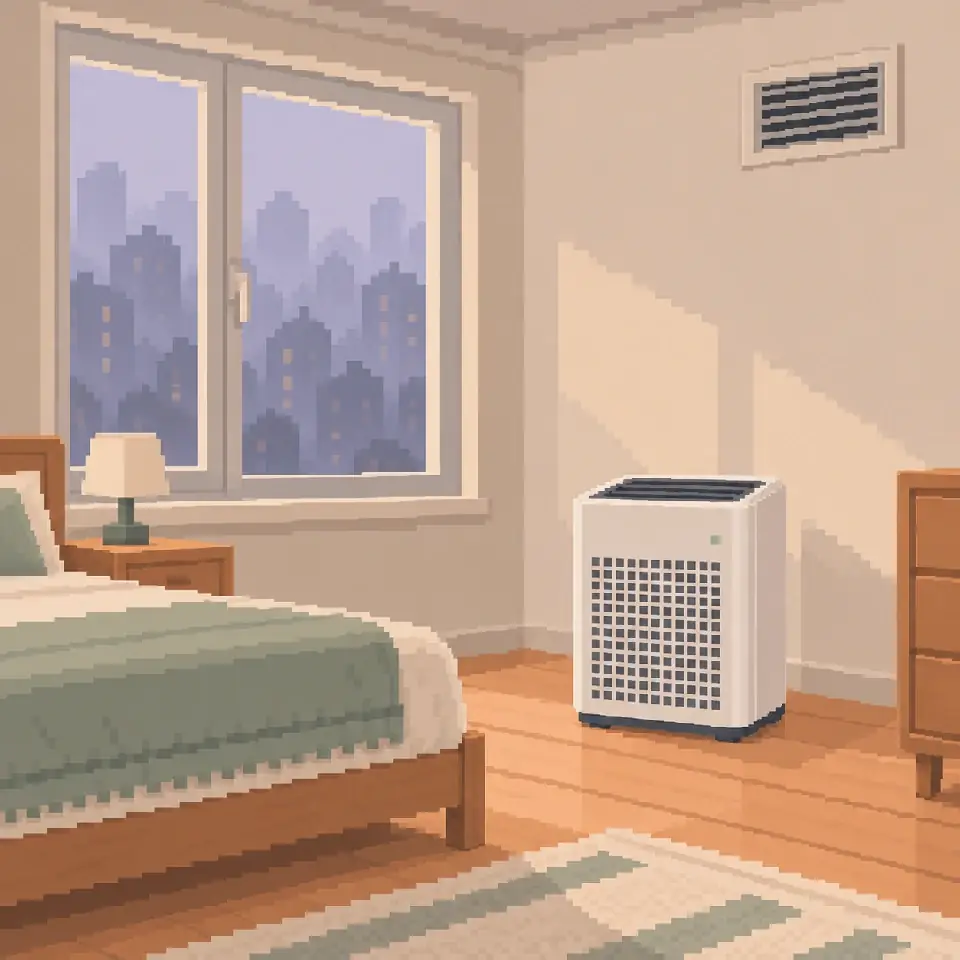
Start with the room where you sleep or spend most of your time. When outdoor particle levels are high, keep its windows closed and avoid opening the door unnecessarily. It is easier to maintain cleaner air in at least the place where you rest.
Keep ventilation grilles and ducts clear. Blocking required ventilation is dangerous, especially in a home with gas appliances. If you already have an air cleaner, put it in your chosen room.
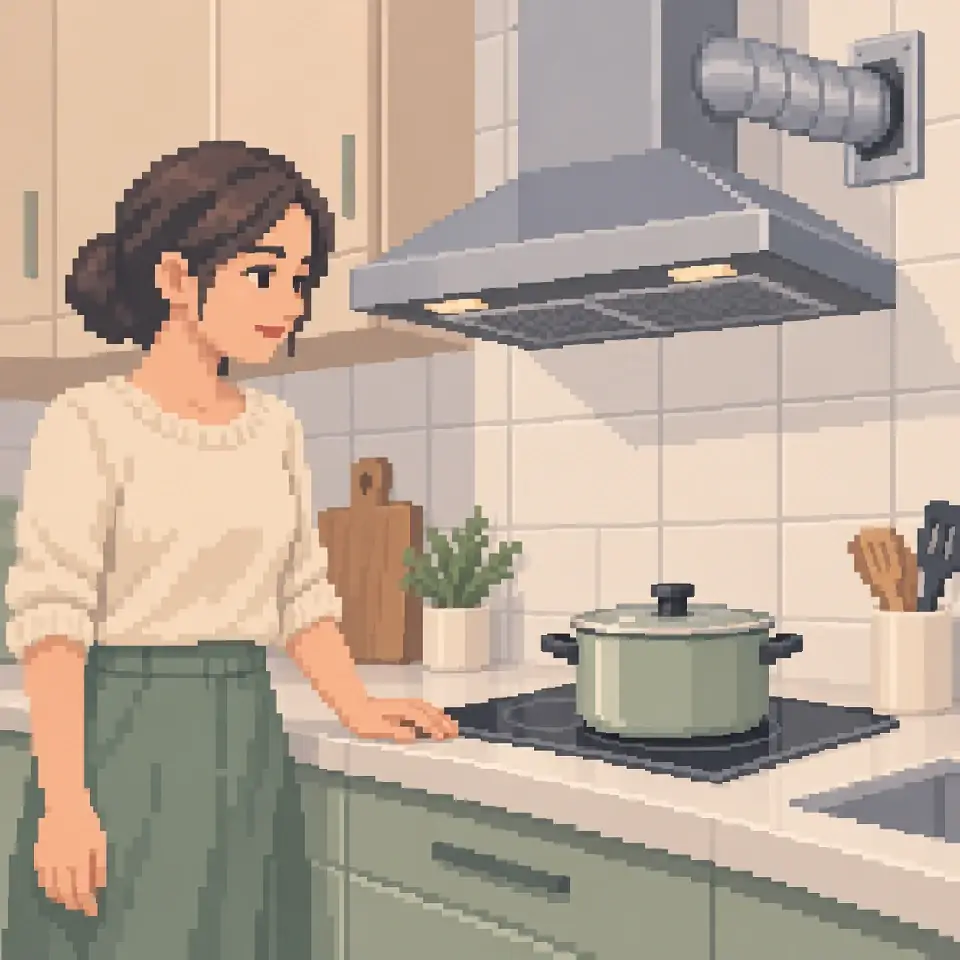
Indoor sources matter too: cigarettes, candles, incense, frying and burnt food add particles. On a bad-air day, choose food that needs less frying and use a working extractor hood that vents outside. A recirculating hood that sends filtered air back into the kitchen does not replace fresh-air intake.
Use a damp cloth or mop for settled dust. A vacuum with a HEPA filter returns less fine dust to the room. Damp cleaning helps with dust on surfaces; filtration removes particles suspended in the air.
Choosing an air cleaner without overspending
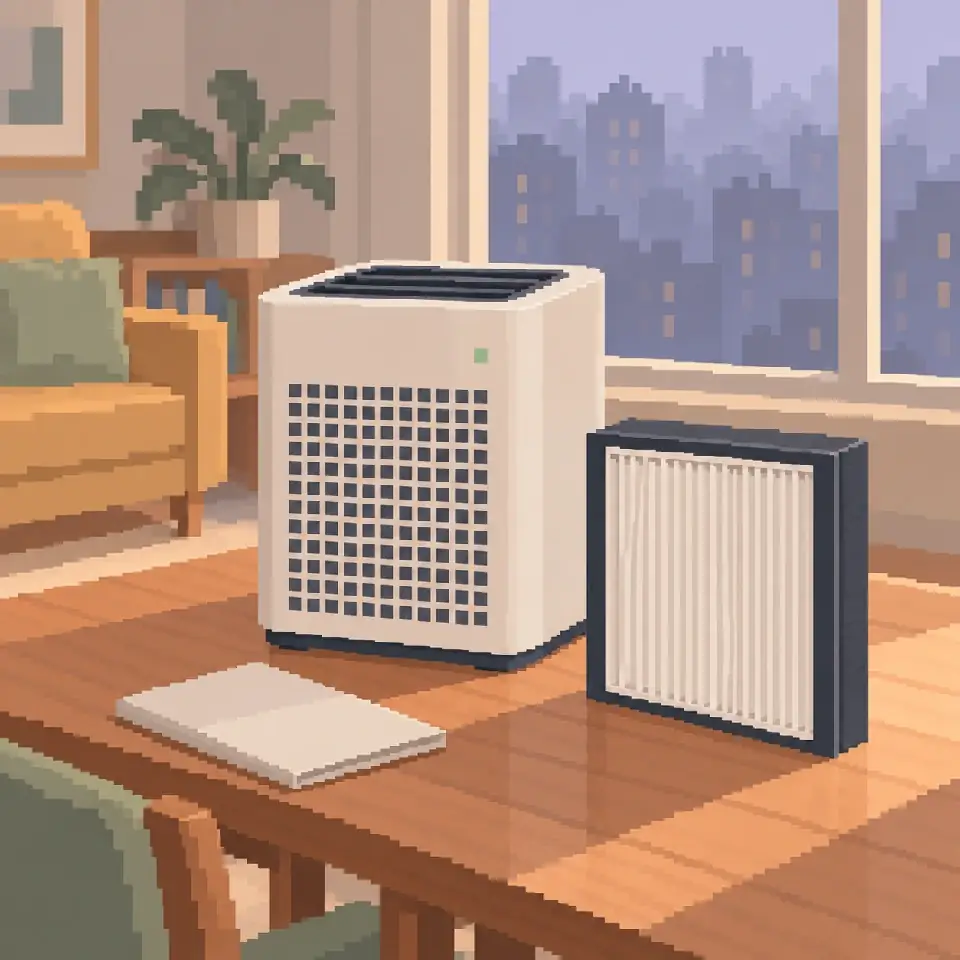
For particles, look for a high-efficiency mechanical filter, usually HEPA. Check more than the filter name: CADR is the equivalent volume of air cleared of particles per hour. It measures filtration performance, not outdoor air supply. Shops usually list it in m³/h. An “up to 80 m²” claim is much harder to compare without the calculation conditions.
Take a 20 m² room with a 2.7 m ceiling: its volume is 54 m³. A CADR of around 270 m³/h means filtering the equivalent of roughly five room volumes per hour, relating filtration performance to room volume. Higher ceilings or an open door to another room require more capacity.
Check which fan speed the CADR was measured at. Often it is the noisiest one. If you use a quiet setting at night, actual cleaning performance will be lower. Before buying, check replacement-filter prices and availability: filters need changing regularly.
Place the cleaner where curtains and furniture cannot block its intake or outlet, and keep it running for long periods while pollution persists. Follow the instructions for clearances and filter changes.
So when should you open the windows?
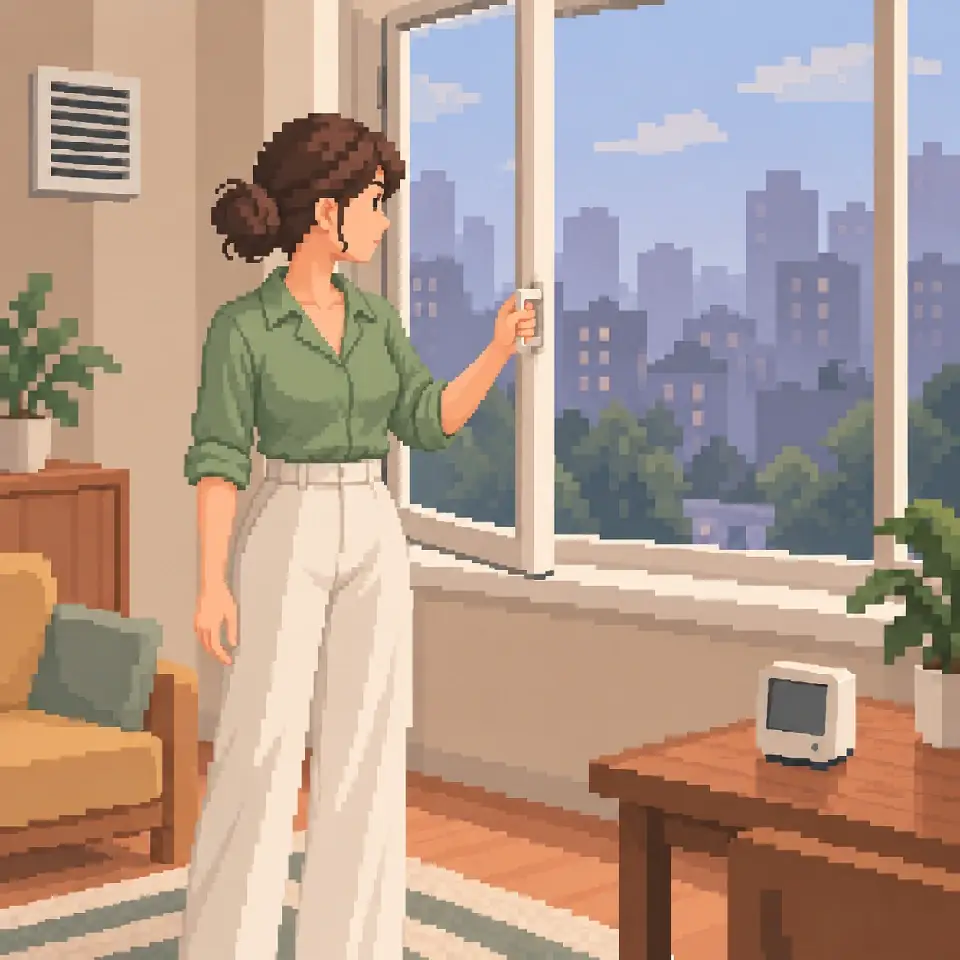
Windows cannot stay closed all autumn. Exhaled CO₂ and moisture build up indoors, and HEPA removes neither. You need ventilation to renew the air, alongside reducing indoor pollution sources.
Use fresh outdoor readings and open the windows when the air has become noticeably cleaner. There is no fixed “right” hour. In Tashkent, light winds and cooling can allow pollution to accumulate near the ground in the evening and at night. After airing the room, close the windows again if needed and continue filtration.
PM2.5 and CO₂ sensors answer different questions. One measures fine particles; the other helps assess the build-up of exhaled air.
What is often mistaken for protection
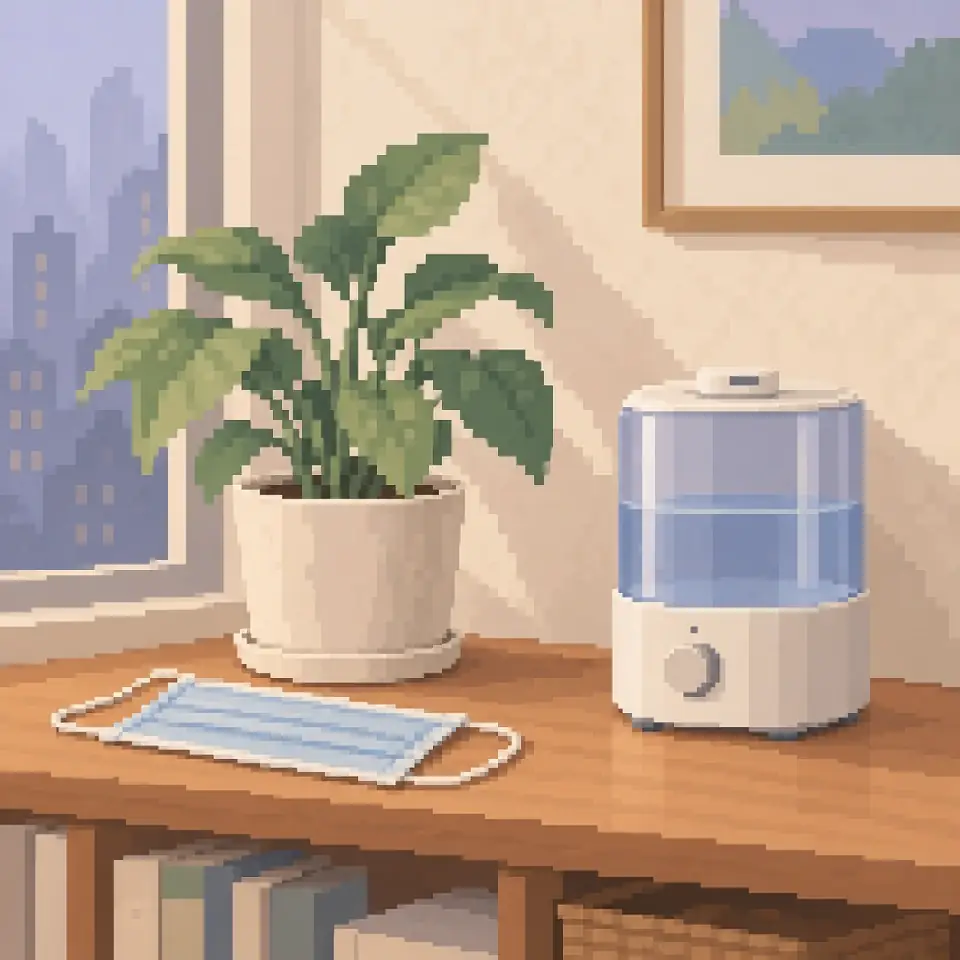
People often try to replace filtration and ventilation with familiar household solutions — for example, the idea that plants will clean the flat.
The usual number of houseplants in a home does not provide significant air cleaning. Keep the greenery for its own sake; it does not replace filtration.
“A humidifier will make all the smog settle.” It may ease a dry nose or skin, but does not replace an air cleaner. Excess moisture encourages mould, while a dirty device can disperse microorganisms and minerals from its water. The EPA advises keeping humidity at or below 50% and maintaining the device as instructed.
“Wet gauze or a medical mask does the same job.” Their fit and filtering material differ. Against fine particles, they do not offer protection comparable to a suitable respirator. Covering your face with a wet cloth is particularly ineffective.
“An ozone generator will make the air healthier.” Ozone irritates the airways. At concentrations safe for people, it is ineffective at removing many pollutants; increasing the concentration in a living space is dangerous. Before choosing a device with ionisation, check whether it generates ozone and whether that mode can be switched off. Mechanical filtration is sufficient for capturing particles.
Who should cut exposure further?
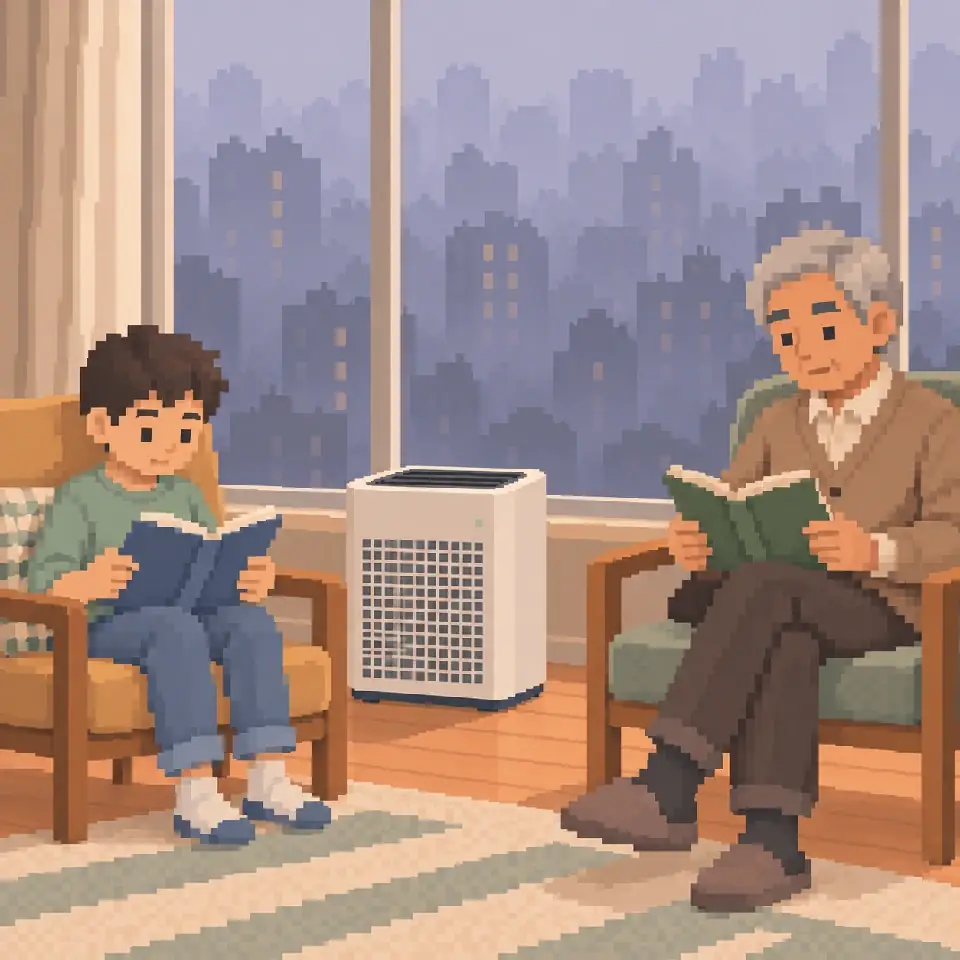
Children, pregnant people, older adults and people with heart or respiratory conditions should be stricter about reducing exposure: they are more sensitive to pollution. Shorter outings and rest somewhere with cleaner air are particularly useful. If you have asthma, review your action plan for such days with your doctor and keep your prescribed inhaler handy.
An adult respirator often fits a small face poorly. Children under two should not wear masks or respirators. For older children, the CDC highlights the same fit issue: a model needs to fit and be worn correctly; NIOSH does not approve specific children’s models. A child’s time in polluted air should still be reduced.
If a walk brings on coughing, wheezing or unusual breathlessness, stop exerting yourself and move to cleaner air. Persistent or worsening symptoms need medical attention, even if the app has changed to a friendlier colour.
When to get help
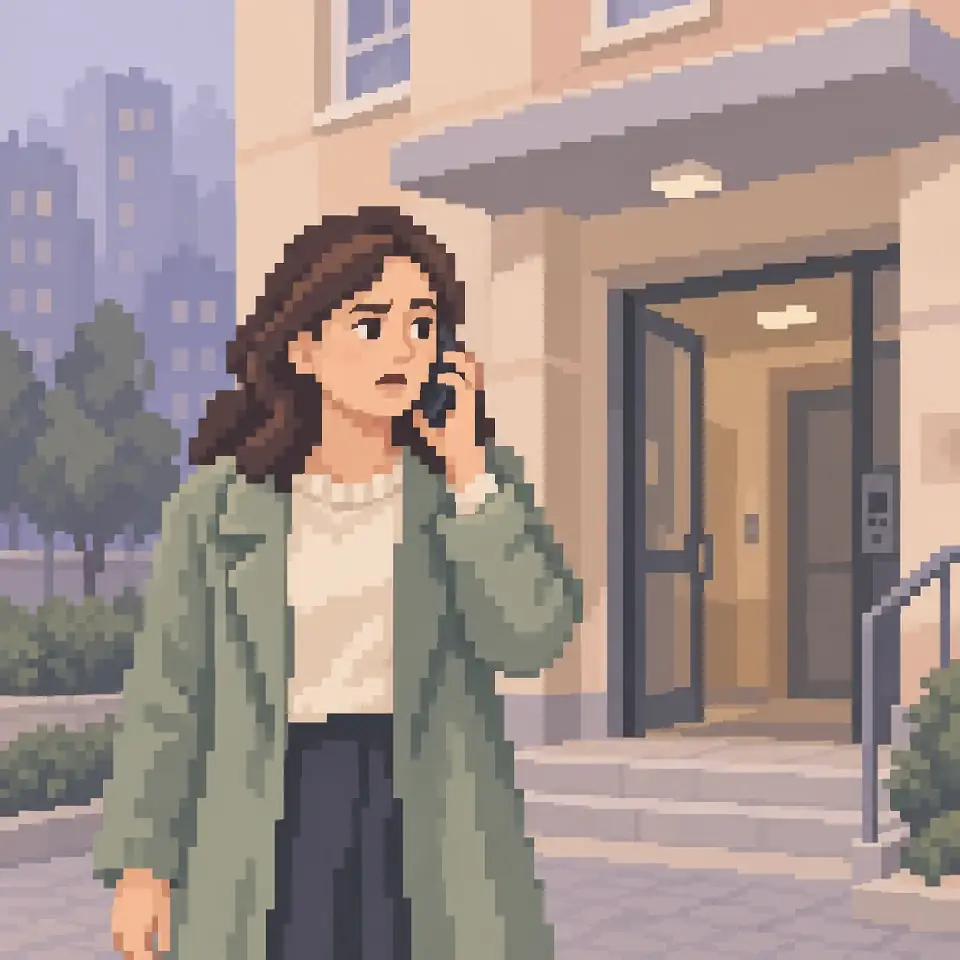
Severe breathlessness that makes speaking difficult, chest pain or heaviness, sudden confusion or blue lips need urgent care — call an ambulance on 103. Do not wait for the index to improve or the air cleaner to work.
Another warning sign is several people at home developing headaches, nausea or marked drowsiness at the same time, especially with gas appliances running. These symptoms can indicate carbon monoxide poisoning: leave the building and call 103 from outside. Carbon monoxide has no smell and a HEPA filter does not capture it.
If you smell gas at home, leave and call the emergency gas service on 104 from outside. The rules prohibit flames and switching electrical appliances on or off indoors. Getting out of the dangerous space comes first.
A plan for the next bad-air day
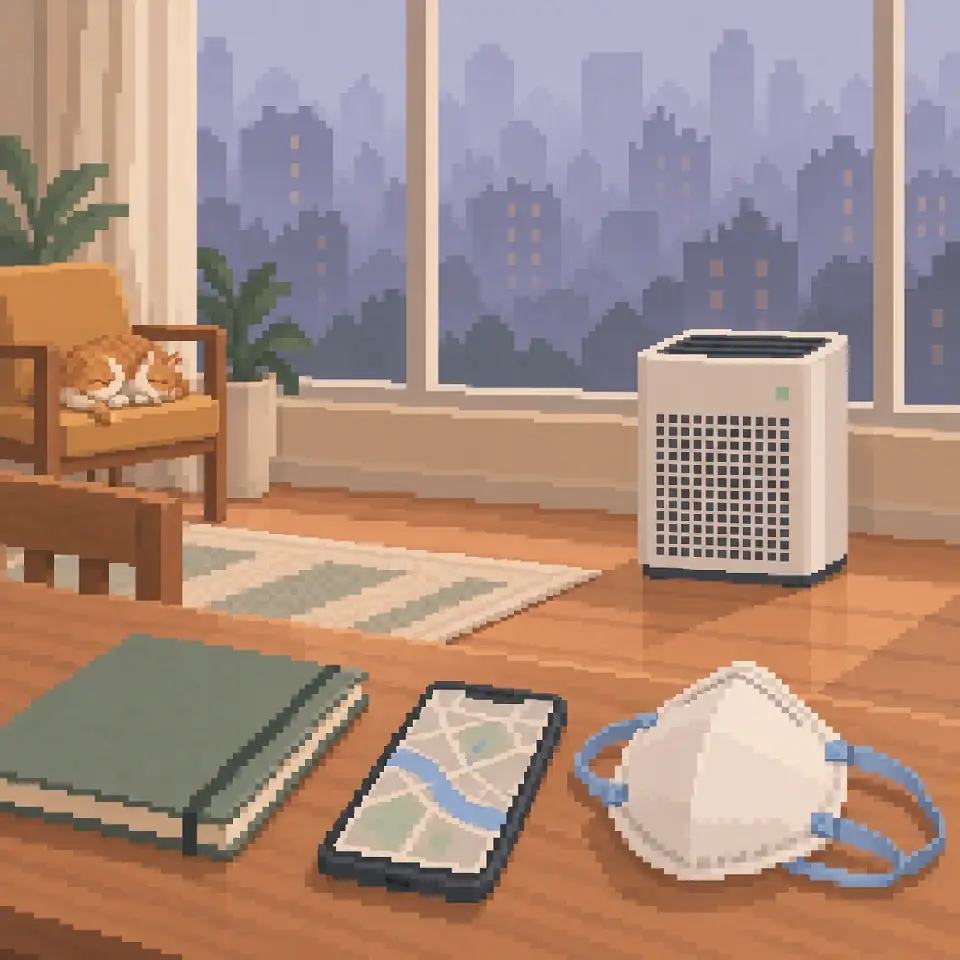
Check fresh readings near home and cut back on long, strenuous outdoor tasks. Find a suitable respirator for essential outings. At home, remove smoke sources, keep the room where you rest cleaner, and ventilate when outdoor conditions improve.
Claim your tazik and save the article. Here’s to a slightly calmer next bad-air day 🧡