The hot tap has been running for several minutes, but your shower is still on hold: the water is cold. If your flat has a meter, it counts every litre going down the drain. In October, a strong smell added to the problem. On the 16th, Veolia confirmed complaints from five Tashkent districts.
The next day, the company said the parameters tested met the required standards. Those statements did not identify the cause of the smell.
That still leaves the cold hot water: why does so much have to run away before it warms up, and can residents get that money back?
Where the water in the hot tap comes from
Water is heated at combined heat and power plants and boiler houses, then pumps send it through the city’s pipes to buildings. A heating unit regulates the supply at the building’s inlet. From there, the water travels through risers and the flat’s pipes to the tap. It can lose heat on the way to the building and inside it.
In the older open system, water for the taps is drawn directly from the heating network. A closed system separates the flows: network water passes through a heat exchanger and warms the mains water supplied to flats. The two do not mix.
Tashkent is gradually moving to this arrangement.
Why the water cools and changes colour
Water in a flat’s pipe cools while the tap is closed. When it is opened again, that volume goes down the drain first. Poor circulation lets water cool in the shared system too, so residents have to run off much more. An ordinary meter measures volume and keeps counting even when the water is cold.
The fault can be far from the bathroom. After residents of Yunusabad’s 17th quarter complained, a commission found a damaged water pipe and a flooded heating chamber on 28 September. The hot water there had cooled to 36 °C. Inside a building, risers and heating-unit equipment can also disrupt the supply.
Changes in an old network’s operating conditions can release deposits and corrosion particles into the water. In October, Issiqlikta’minoti linked temporary changes in colour and smell to preparations for the heating season.
Colour and smell call for sampling; temperature calls for measurements at the inlet and in the flat. This also helps locate the fault: the supplier handles the city pipes, while the building’s servicing organisation handles the internal network.
What is changing in the hot-water system

The present system took shape in stages. Tashkent’s combined heat and power plant opened in 1939 to serve industrial enterprises. In the 1960s, its capacity expanded to supply heat to the city as well; much of the central network developed in the 1960s and 1970s.
Veolia Energy Tashkent became the operator on 1 July 2022. It distributes heat from producers, generates some at local boiler houses and takes part in modernisation.
The Accounts Chamber’s July report records the progress of this modernisation. The Vodnik and Quruvchi neighbourhoods have switched to a closed system.
Across the city, work is behind schedule: of roughly 1,100 planned heating units, 309 had been installed and 153 put into operation.
The same report records a rise in complaints about hot water and heating: 1,229 in 2020 and 9,449 in 2025.
How to get an inspection
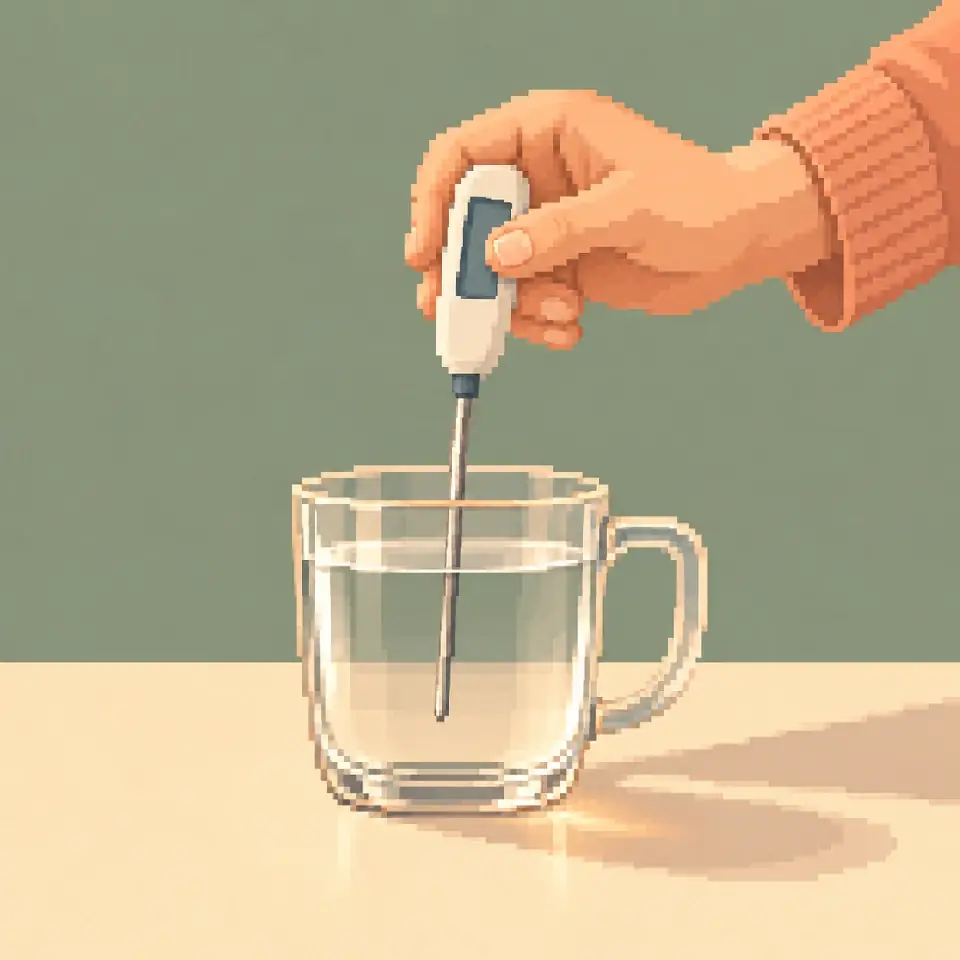
First, establish how far the problem extends: is the water cold at every tap in the flat or just one, and do neighbours on the same riser have the same problem? Note the date and time, and record the water’s colour, the meter reading and the temperature measured with a water thermometer.
Report the problem to Veolia and the building management organisation at the same time. Veolia’s number is 1347, and its email is info@veoliaenergy.uz. Give your address, flat number, customer account number and when the problem began. Ask the operator for the request’s registration number, the time it was registered and the name of the person who took it.
Under the rules, a consumer is entitled to an inspection record within 18 hours of reporting the problem. The resident and representatives of the supplier and the building’s servicing organisation sign it.
Ask for measurements at the inlet and in the flat, with the locations, results and start time of the problem recorded. The document is drawn up in two copies; one stays with you.
How to get a billing adjustment

The hot-water standard is 50–75 °C. At the inlet control measurement, a deviation of up to 3 °C is allowed during the day and 5 °C from midnight to five in the morning.
If the temperature is below 40 °C, water used during those hours is charged at the drinking-water rate.
If it is at least 40 °C but colder than permitted, the bill is reduced using a formula based on the temperature and duration of the problem. Charges are also reduced for days when the water’s composition fails to meet the standards.
The adjustment needs a confirmed period. The initial joint record states the start time and measured conditions; the end is confirmed by a record of restoration or a suitable metering device. Then submit a request for a billing adjustment referring to the record. The credit must be applied in the next billing period.
If an error has already appeared on the bill, submit a written claim within five days of discovering it. Seek a correction to your customer account: any amount you deduct yourself remains an unpaid part of the bill.
If nobody comes or the bill stays wrong

If no inspection takes place within 18 hours, save the correspondence and call details, document the failure to attend and request a joint inspection again. These records, photos and neighbours’ accounts support a complaint about inaction.
For problems with the building management organisation or an unresolved fault, contact the Ministry of Construction and Housing and Communal Services. For service quality and billing, contact the Competition and Consumer Protection Committee.
Attach the request number, inspection record or evidence of non-attendance, the supplier’s reply and the disputed bill. Sanepid also accepts complaints about water composition: describe the change in colour or smell and request a quality check.
Can you just install a water heater?
A storage water heater gives the flat its own supply of hot water. It heats cold mains water, so you can stop using central hot water by closing the working valve on your flat’s branch. Leave the shared riser, meter and seals in place.
With a working individual meter and unchanged readings accepted by the supplier, current central hot-water consumption is zero, and you need to keep submitting readings even if they do not change. Without a meter, a closed valve does not cancel the per-person charge. The supply contract also remains in place.
Heating is different: the rules prohibit disconnecting an individual flat from the shared system. You cannot remove radiators without authorisation or cancel heating charges by buying a heater. Shared risers and the cost of maintaining the building’s networks remain.
What it costs to heat water at home
Heating water yourself increases electricity use. Raising a cubic metre of water from 15 to 55 °C takes about 46.5 kWh. That is the physical minimum: the tank loses heat, and maintaining its temperature uses extra energy.
Take a flat that uses 180 kWh a month before adding a water heater. Of the extra 46.5, the first 20 fall into the tier at 650 sum and the remaining 26.5 at 900. Electricity for that cubic metre costs at least 36,850 sum.
As of 26 October, metered central hot water is priced at 8,928.67 sum per cubic metre including VAT. In this example, electricity alone costs more than four times as much. Heat losses, cold water, sewerage, the heater itself, installation and maintenance add to the cost.
Before buying, have the wiring, protection, earthing and the flat’s permitted power capacity checked.
What about a gas water heater?
Start by finding out whether the appliance is allowed in the building and whether connection is technically possible. A gas water heater or boiler needs a design, approved commissioning, suitable ventilation and flue arrangements.
Having a gas cooker does not authorise connecting a water heater to the gas line: unauthorised installation is prohibited. Like an electric heater, it also needs a cold mains-water supply.
We just want hot water

Save the article and share it with neighbours on your riser if they have the same problem. Your tazik is waiting here 🧡