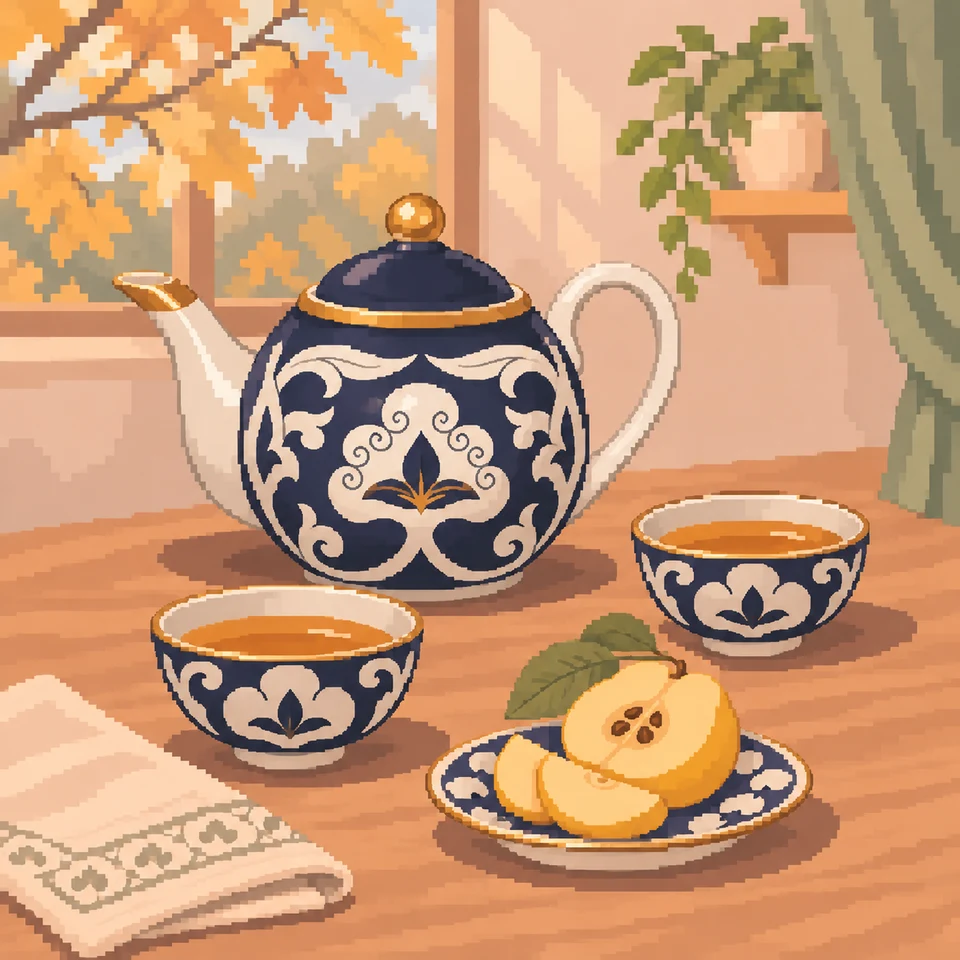
Autumn calls for more tea. And we’re sure you’ve had at least one cup from a blue bowl with a white cotton pattern. Perhaps there’s one in your kitchen right now.
The pattern is known as Pakhta or Pakhtagul. Artists at the Tashkent Porcelain Factory developed many versions, for elaborate tea sets as well as everyday dishes. While the tea brews, let’s take a closer look.
What is the pattern on the bowl?
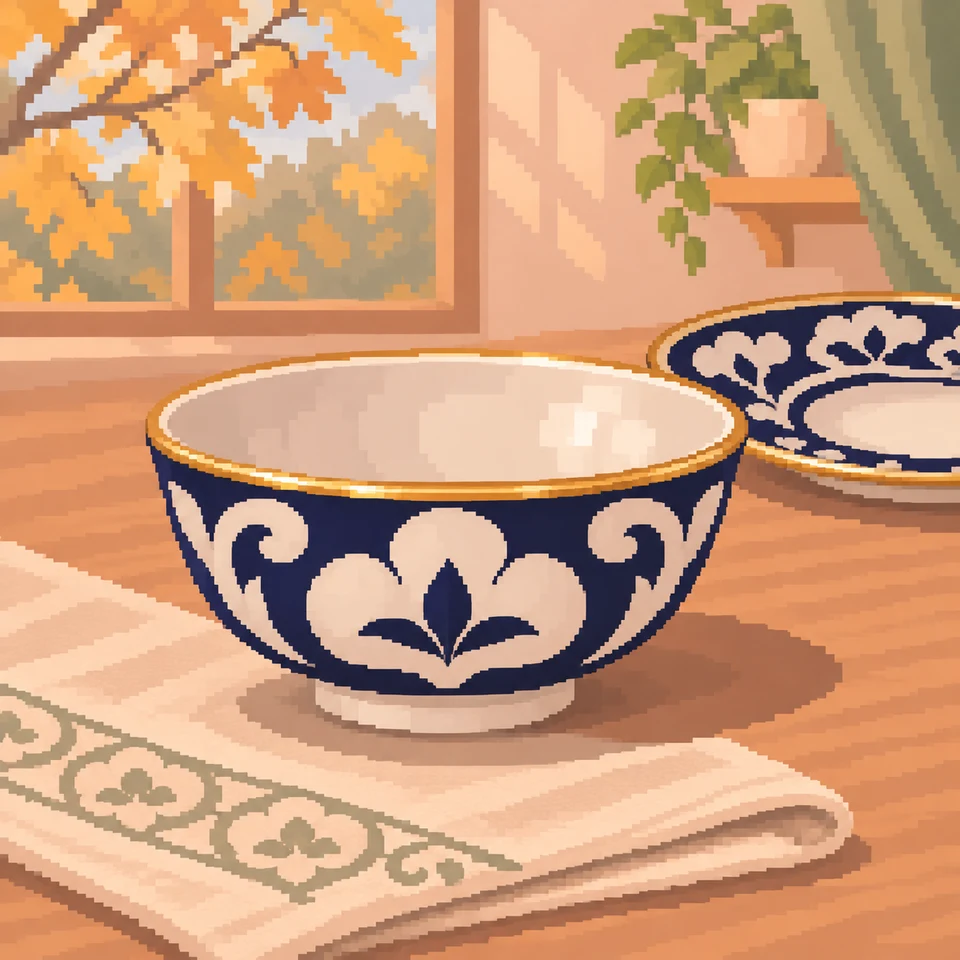
In Uzbek, paxta means “cotton”, and gul means “flower”. The decoration can include open cotton bolls, leaves and curling stems. They have been arranged into an ornament: a branch follows the curve of the bowl, neighbouring shapes repeat, and the white design stands out against a dark ground.
Look at this set with a round teapot and small tea bowls. Its white cotton bolls have three rounded lobes enclosing dark pointed shapes. Curls run between them, and a fine gold line follows the rim. Another teapot in the same photo collection has taller cotton shapes surrounded by smaller details.
Art historian Akbar Khakimov traces the cotton boll on Soviet porcelain to the 1930s and 1940s. Dishes were decorated with symbols of the new political order, and cotton became one of those motifs in Uzbekistan. The Tashkent factory later helped spread the design through mass production.
How Tashkent began making porcelain
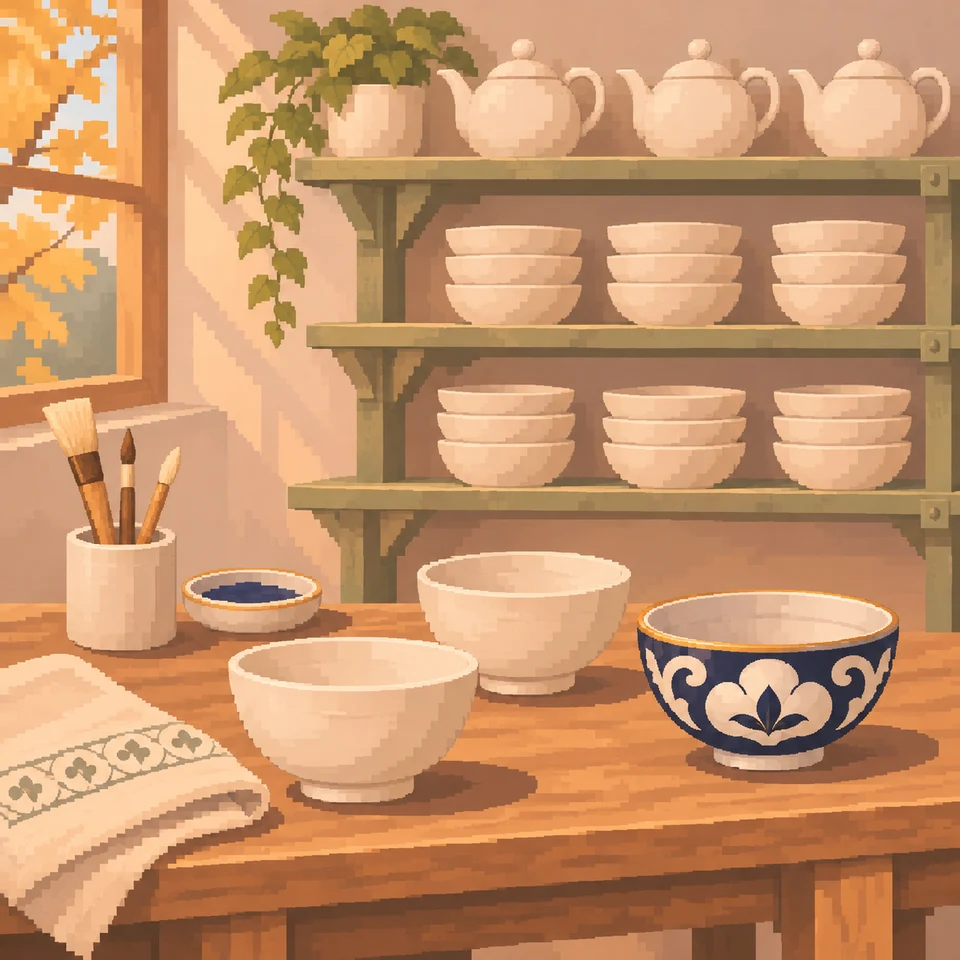
The Tashkent Porcelain Factory opened in the early 1950s. Before then, porcelain was brought to Central Asia from elsewhere: first from China, and later from Russian manufacturers, among others. The History Museum of Uzbekistan holds Gardner and Kuznetsov pieces made for this market, including tea bowls, teapots and large dishes.
These familiar dishes were now being made in Tashkent itself. The factory on Sagban initially used forms and models from other manufacturers. Its own artists and technicians then began developing new pieces and patterns.
The museum collection includes factory pieces decorated with Pakhta, Atlas and Golden Deer designs. Atlas has a clear connection to patterned cloth; with Pakhta, artists explored plant forms. The same shape of dish could look quite different depending on its decoration.
Many versions of a familiar design
A catalogue by D. Fakhretdinova includes R. Aripdjanov’s Cotton set, dated 1961. It describes white open cotton bolls against a blue ground. The next page shows a different artist’s decoration: A. Nugmanov’s Birds set, Tashkent, 1969. These pieces have recorded titles, artists and dates.
Other artists also worked with cotton motifs. The name attached to one set therefore does not explain the origin of every Pakhta bowl. Many versions appeared on everyday dishes. In her recollections of the factory, Safiya Shavkatova specifically notes how difficult it is to establish who created the most widespread design.
How the pattern is applied
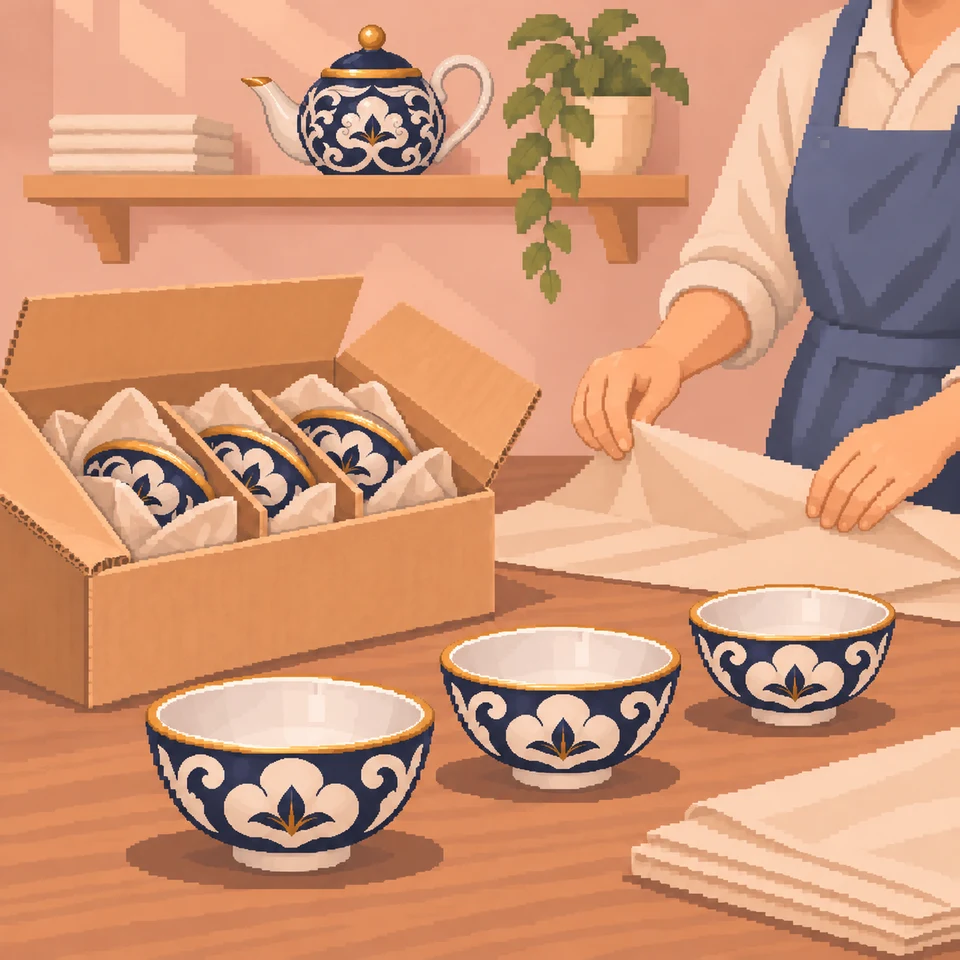
A 2023 report by Gazeta describes work at the Centre for Faience and Ceramic Crafts. The business opened on Sagban in 2000, turned to Pakhtagul dishes in 2005 and moved to the outskirts of Tashkent in 2019.
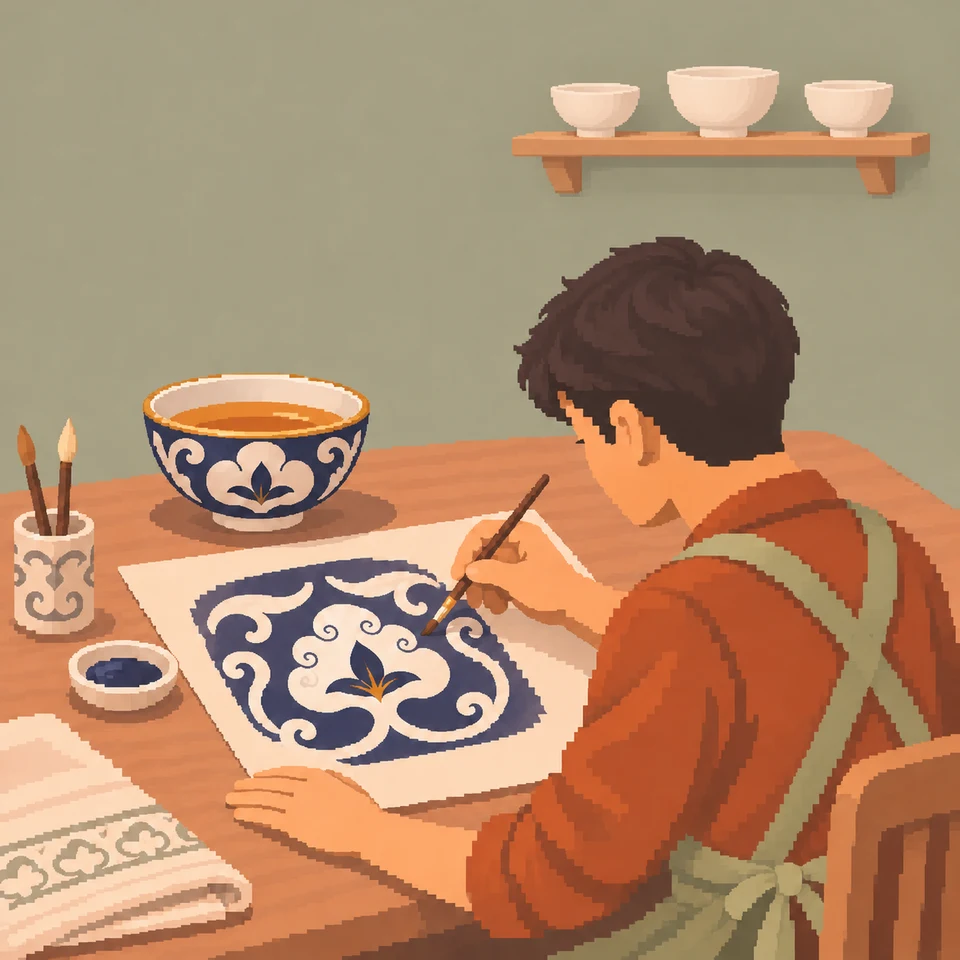
The decoration is applied using a stencil. It covers the areas that are to remain white, while paint is sprayed onto the exposed surface. The dishes are then glazed and fired again. Gold decoration is added at a separate stage.
A stencil allows a pattern to be repeated across whole batches. Pakhta appears on old factory porcelain as well as on later dishes, so the design alone cannot identify the manufacturer. For another clue, turn the bowl over.
The bird underneath the bowl
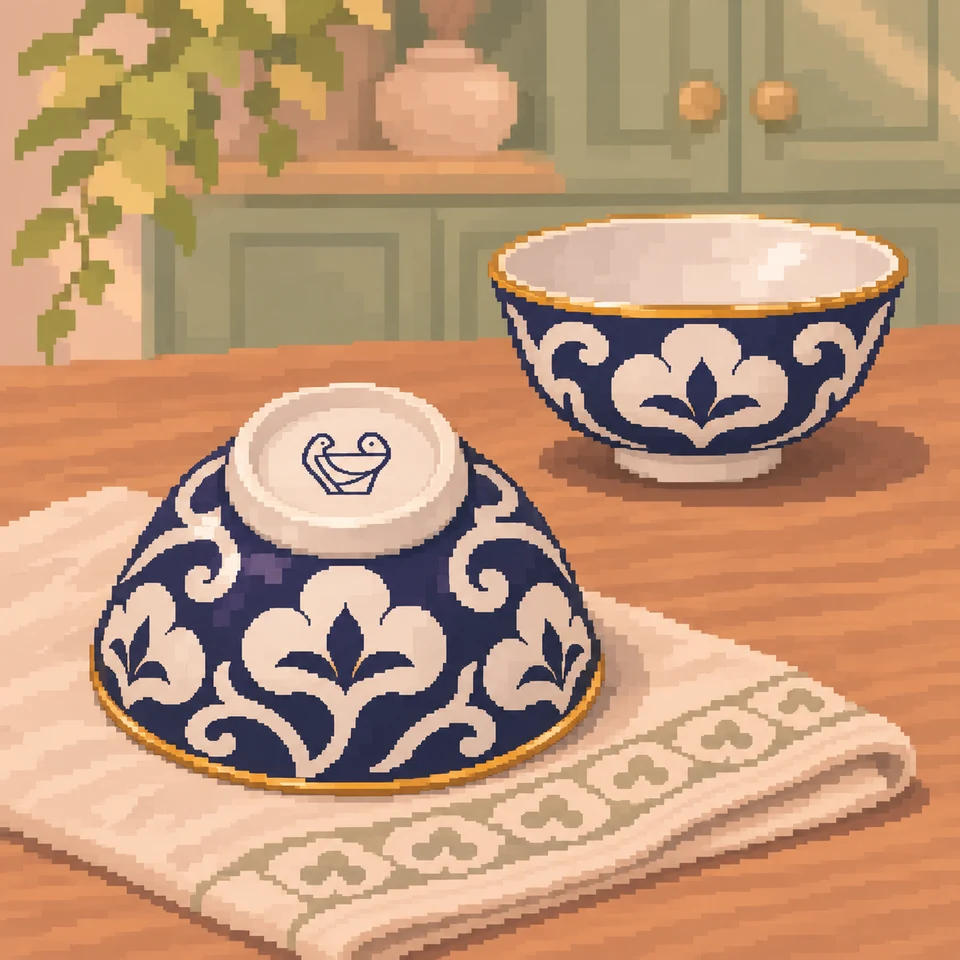
One of the Tashkent Porcelain Factory’s marks features a stylised Anka bird. Dishes with similar decoration can carry different marks, so it is worth looking at both the object and its underside.
The mark can help establish where a bowl was made. To narrow down the date and artist, its shape and decoration can be compared with catalogue descriptions. Family members may know how a particular bowl came into the house: who bought the set, who received it as a gift or where it was brought from.
Which tea sets do you remember?
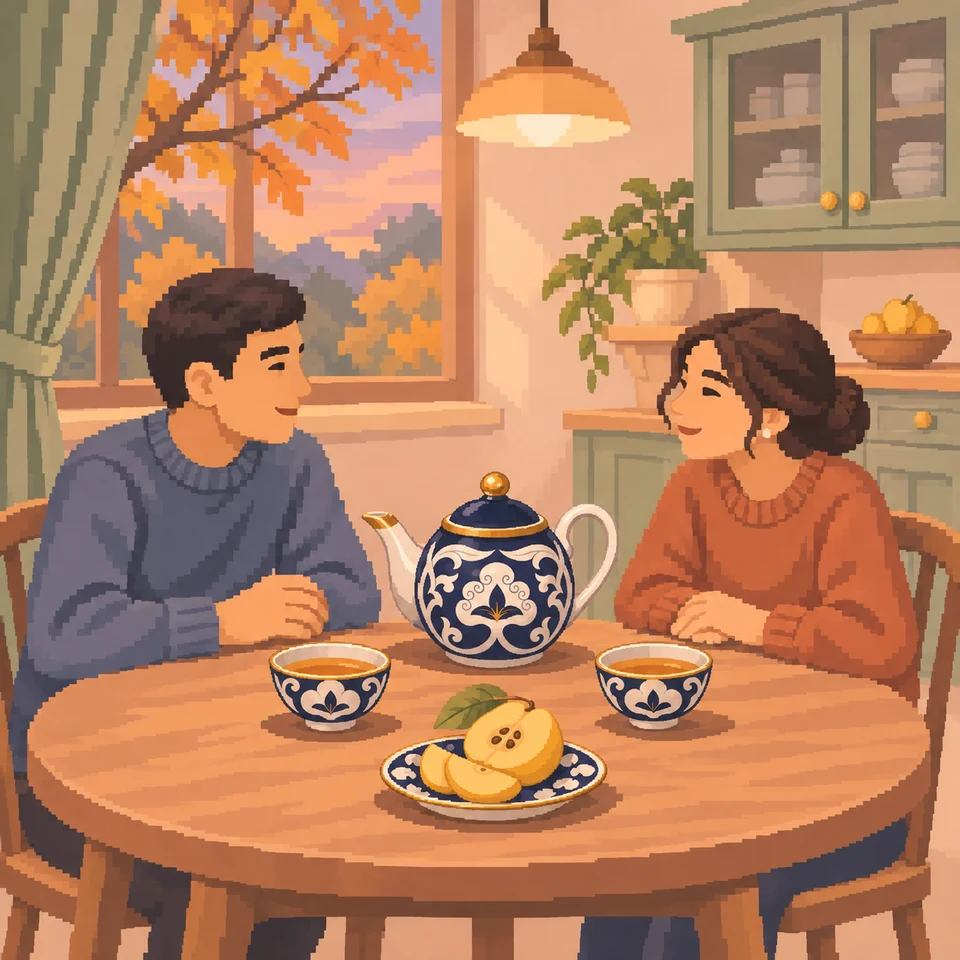
Tell us in the comments about the unusual tea sets and tableware you’ve had at home. Perhaps your grandmother had cups painted with birds, or plates with golden deer came out for family celebrations? Which patterns have stayed with you?
And the tea should be ready by now.