
After a downpour, water can sit on a pavement beside a perfectly clear aryk — one of Tashkent’s irrigation channels. Sometimes a high kerb stops it reaching the channel. Sometimes it gets in but cannot flow onwards, through a pipe under an entrance or a section that cannot handle the volume. Finding where the water is held up, and why, tells you whether cleaning will help.
What aryks are for
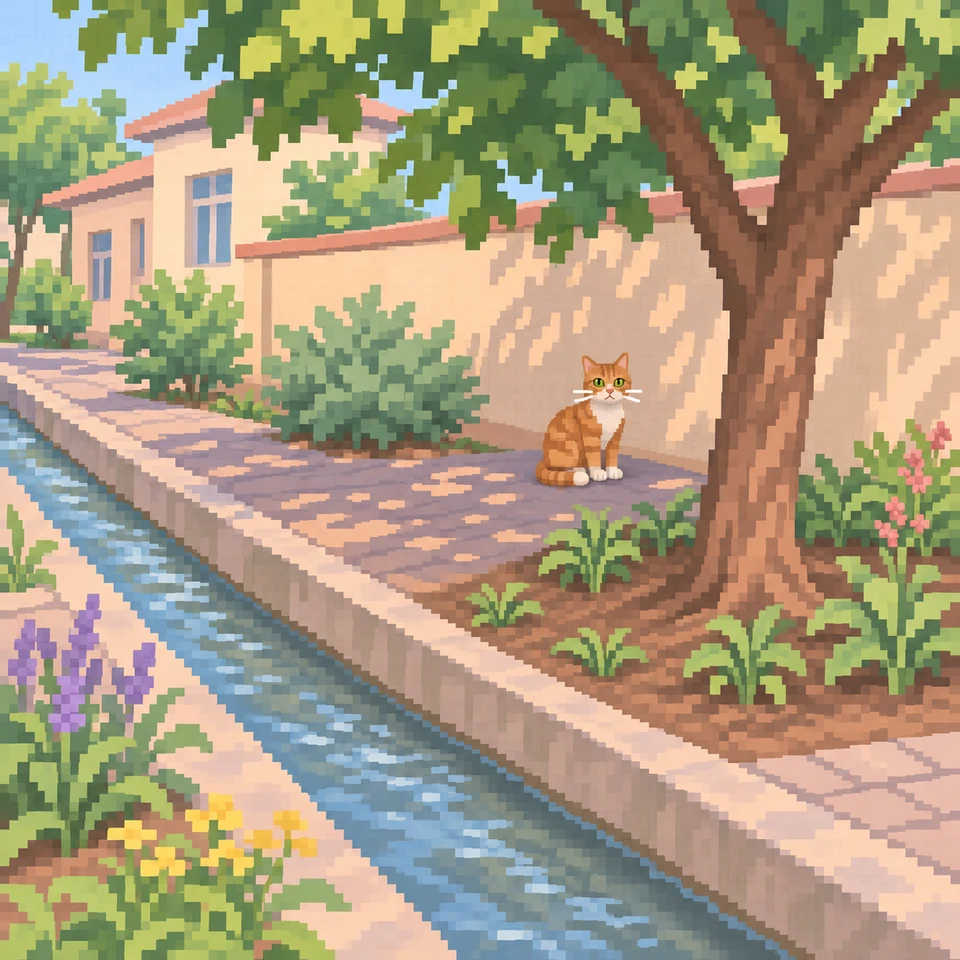
Tashkent’s aryks were developed primarily for irrigation. Water from the Chirchiq and Bozsu flowed through progressively smaller channels to gardens and other planted areas. This network is described in a book on the city’s irrigation systems.
Water runs downhill along open channels. For irrigation, it needs to reach the plants; during rain, it needs to leave streets and courtyards. Aryks, gutters, inlet grates and pipes all play a part. In some places, irrigation water and runoff share sections of the network.
During a downpour, water enters the network from the surrounding area. The larger that area, and the less rain that soaks into the ground, the greater the load on its channels and pipes.
Where all that water comes from

A puddle by a bus stop may contain much more than the rain that fell on the pavement. Water can arrive from a roof, a neighbouring courtyard or a street further uphill. The entire area draining into one place is called its catchment. The terrain defines its boundaries, while kerbs, entrances and walls alter the route water takes.
The surfaces in that area matter too. Some rain soaks into soil. Roofs, asphalt and dense paving limit infiltration, so more water runs off. Paving an uphill courtyard can send more water to the street below, even if nothing on that street has changed.
Then there is the intensity of the rain. Light rain spread over a day gives the network more time to drain. The same volume in a short downpour may arrive faster than the channels and pipes can carry it away. A daily rainfall total is therefore not enough to explain a flood: the duration and intensity of the rain, and the size of the area draining into the site, also matter.
Why water can collect beside a clear channel
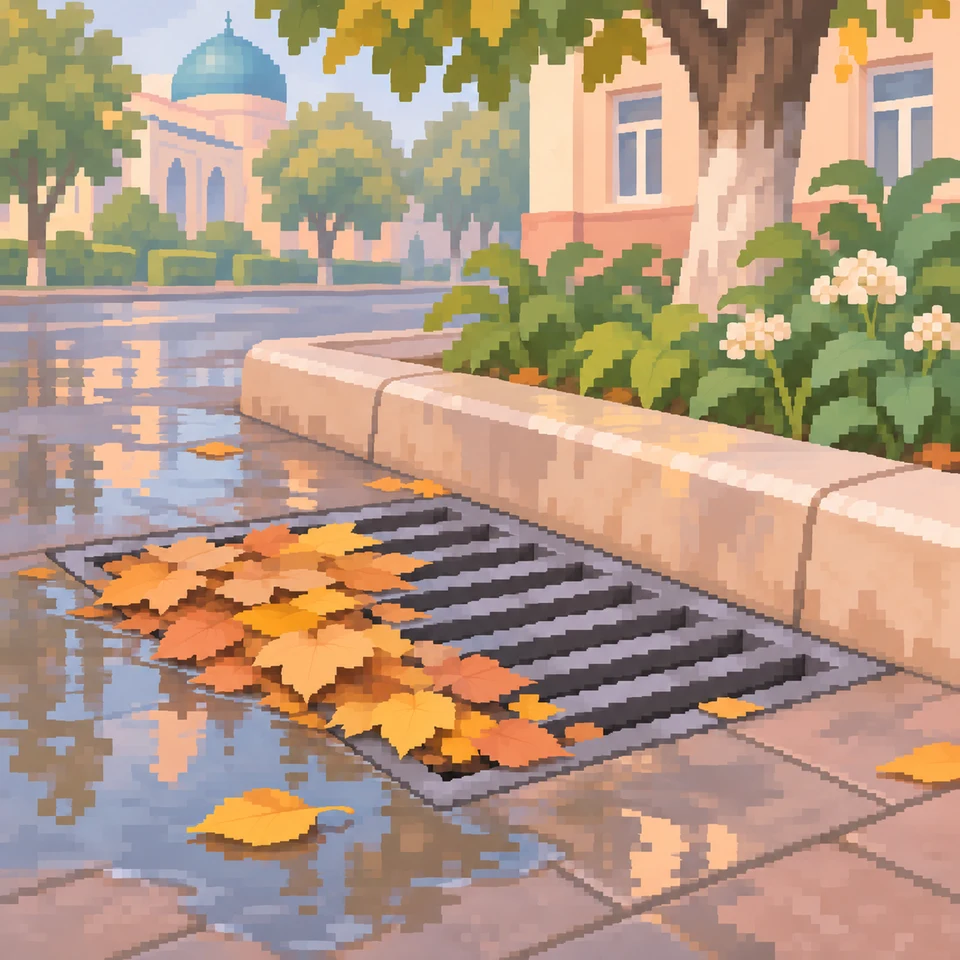
Rainfall and the built environment determine how much water reaches a low point in a street. To drain away, it needs a clear route into the aryk and through the rest of the network.
The water cannot enter the channel. A high kerb may block its path, or a grate may sit away from the main flow. Even a small difference in height affects drainage, so inlet design accounts for surface slopes and grate position. If water flows past the grate, cleaning it will not be enough.
There is an obstruction further along. A channel may pass under an entrance or road, join a pipe or cross an adjoining property. Silt and rubbish can build up there, or the passage may be blocked. Everything beside the puddle can look clear while the water stays put.
More water arrives than the section can carry. An unobstructed passage may still be too small for a downpour. Its capacity depends on the channel’s size and slope, bends and connections to other sections.
High water downstream slows the outflow. A high water level in the receiving channel or pipe can make it harder for water further upstream to drain. This is called backwater. Drainage calculations account for the water level at the outlet. Replacing a pipe with a wider one without checking where it discharges can move the accumulation further downstream.
Tashkent’s own reports describe several of these causes. After the downpour on 10 May 2026, the city administration cited insufficient capacity at some locations, blockages, unauthorised construction and aryks obstructed for parking. On 10 November, it also highlighted leaves obstructing drainage around channels and grates.
What needs cleaning, and what needs repair
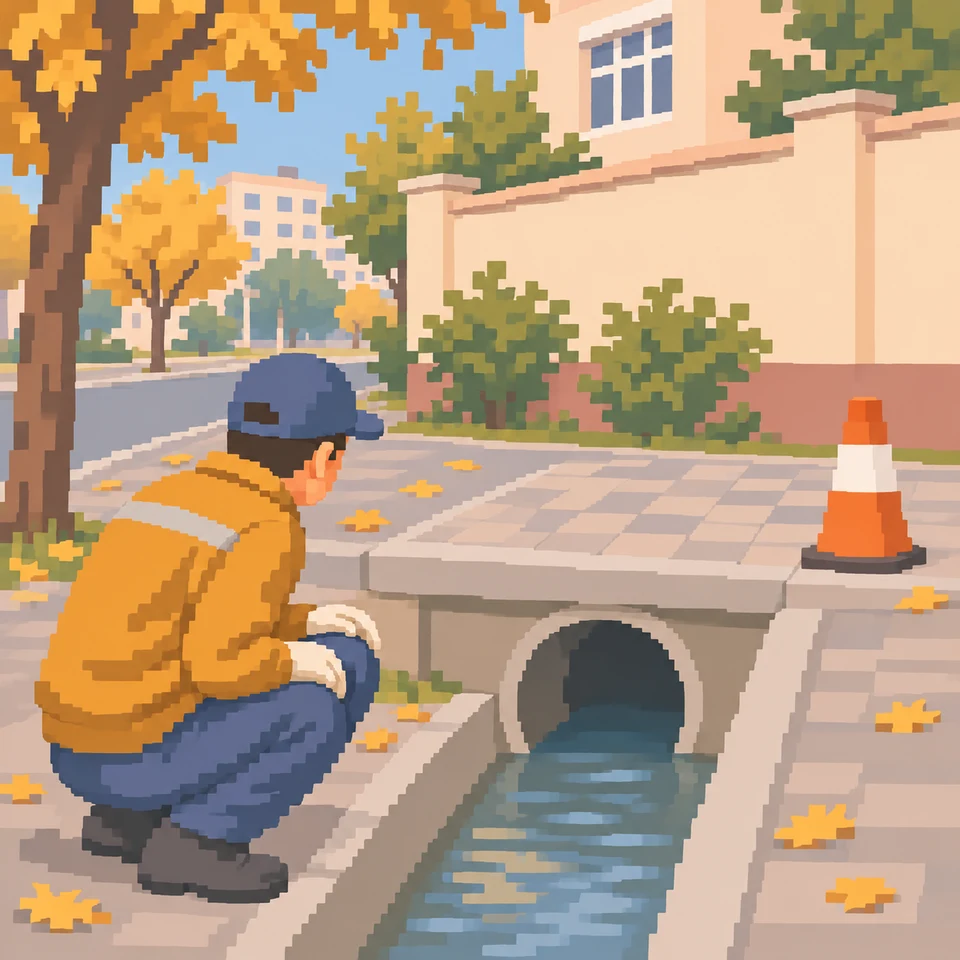
The cause determines the work. Leaves, rubbish and sediment need removing, followed by regular cleaning. Damaged or blocked connections need restoring. Where water bypasses a grate, its position and the surrounding slopes need checking. If the network cannot carry the flow, engineers check the capacity of that section and its connections before deciding what needs to change.
During a flood, services first need to clear a passage, courtyard or road: pump out water, remove rubbish and unblock inlets. That brings immediate relief but does not yet explain why the place flooded. If water returns after cleaning, ask what the inspection found and what further work is needed.
One possible repair involves enclosed drainage. After the May downpour, Tashkent considered new irrigation sections, additional pipes, pumps and inlet grates. Underground pipes still need access for cleaning. They can become blocked too, and the problem is harder to spot. An open aryk is easier to inspect but needs space. The choice depends on the street and how much water needs to be carried away.
Where else rainwater can go
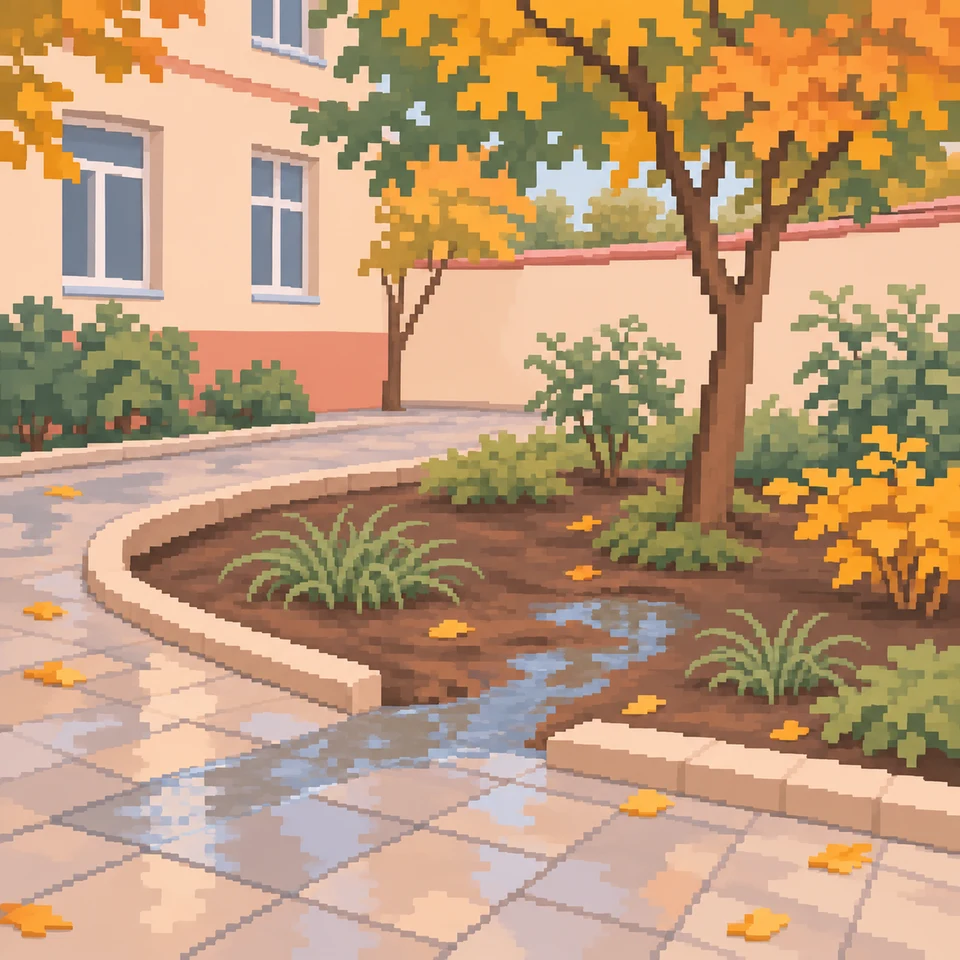
The load on aryks can be reduced before water reaches them. Some rain can be collected for irrigation, held temporarily in storage or directed into planted areas. Less water then reaches the network all at once during a downpour.
Rain gardens are one way to do this: planted areas set below the surrounding surface, designed to receive runoff from paths or roofs. Their design must account for soil, infiltration, groundwater levels and possible contamination. Excess water also needs an outlet. An ordinary lawn behind a high kerb may not serve this purpose at all: water on the pavement might never reach it.
Rainwater collection is also part of Tashkent’s city programme. In December 2025, it was presented as a combination of enclosed drainage, canal repairs and construction, and facilities to collect water for irrigation. A resolution dated 27 July 2026 provides for the drainage, canal and rainwater collection project to be implemented through a public–private partnership by 2031.
Who is responsible for aryks and drainage
A major project and the aryk outside your home may fall to different organisations. Under paragraph 9 of the July resolution, the commissioning body for construction work on the project is the Department for Canal Operation and Improvement of Adjacent Areas under the Tashkent city administration.
In its November update on work during the rain, the city names municipal improvement services and the canal management body. The Department of Digital Development coordinates their work through city and district situation centres. Emergency response, routine cleaning and reconstruction of the same section may involve different contractors or services.
On 19 November, the city administration announced that seasonal water supply to 21 city canals, with a combined length of 97 km, would be turned off in stages for the winter. Work planned for autumn and winter includes clearing silt and rubbish, reinforcing banks and repairing hydraulic structures in preparation for the 2027 irrigation season.
You do not need to trace that whole chain before reporting water outside your home. The city bot or telephone operator takes the report and passes it to the responsible services. You can ask in the report which organisation maintains the section and who will carry out the necessary work.
Where to report flooding
Give the address, a landmark or map location, the time of the rain and a photo. If the place floods repeatedly, say so and add the previous report reference. Take photos from a safe place; do not open manholes or climb into a channel.
If people are in immediate danger and need emergency assistance, call 112.
If this is the first incident, remove the sentence about the previous report. Keep the response and reference number.
After the next rain

If work has been carried out, a downpour of comparable intensity provides a chance to see whether water drains from the old spot or collects at a neighbouring entrance. If the problem returns, new photos and the previous reference number will help you follow up your report.